


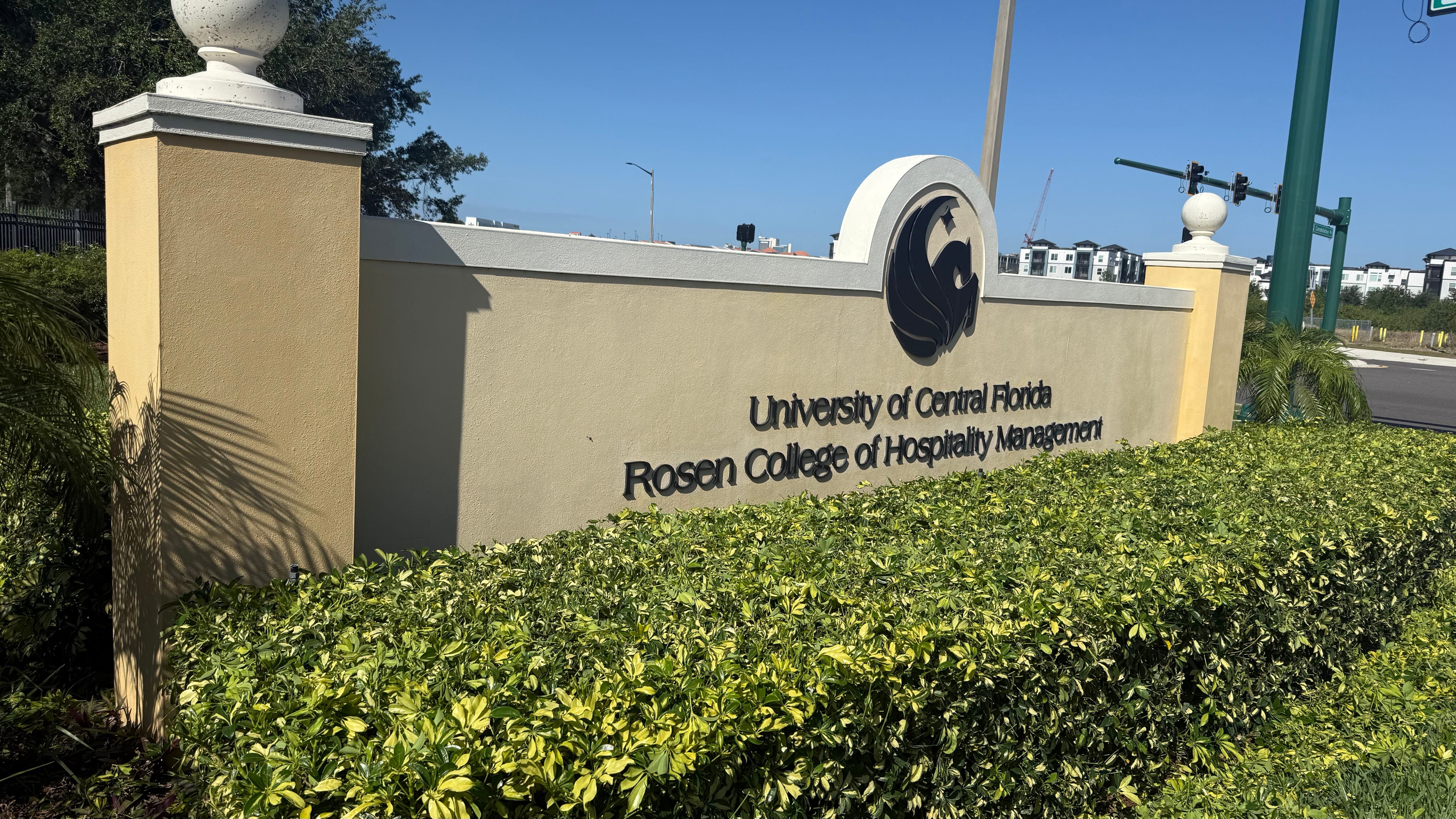
For years, I knew the name Harris Rosen—but I didn’t truly understand the legacy behind it until I was sitting in a classroom that bears his name.
I’ve lived in Central Florida for most of my adult life and have spent the better part of the last 35 years working in its tourism industry—either with Disney or with other travel and hospitality-related companies. During that time, I heard his name often. I knew we shared Disney in common. I knew we had both left the company—mine voluntarily, his involuntarily—to pursue different paths. I was aware of his philanthropy through news reports and had attended several events at his hotels.
But it wasn’t until I attended his namesake college—the Rosen College of Hospitality Management at the University of Central Florida—while pursuing my master’s degree, that I truly learned his story. During my capstone course, I had the opportunity to study his life, his business philosophy, and his impact on the industry and community.
Mr. Rosen passed away just over a year ago at the age of 85 after a brief battle with cancer. What he built—and how he built it—left a lasting imprint not just on Central Florida, but on the hospitality industry as a whole.
From the Lower East Side to the Waldorf Astoria

Harris Rosen grew up in a poor neighborhood on New York’s Lower East Side. His first exposure to hospitality came when he helped his father stack handwritten banquet place cards in a small office at the Waldorf Astoria Hotel. He earned one penny per card, alphabetized.
But what he gained was far more valuable than spare change.
He watched elegant events unfold in the grand ballrooms. He met icons like General Douglas MacArthur, Marilyn Monroe, Pope John, Ty Cobb, and his personal hero, Jackie Robinson. His takeaway from all of it was simple and powerful:
The hotel business looked fun.
That insight led him to Cornell University’s renowned School of Hotel Administration.
Work, Service, and Discipline

While at Cornell, Rosen washed pots, tended bar for a sports fraternity, and sold programs at football and basketball games. He also participated in ROTC, which led to a commission as a second lieutenant in the U.S. Army and a deployment to Korea.
While serving overseas, he taught English in a Korean high school and studied judo, earning a black belt. After Korea, he spent two years in Germany before returning to New York City to chase a lifelong dream: working at the Waldorf Astoria.
His first role?
A file clerk in Personnel.
It wasn’t glamorous. It didn’t match his degree. But it gave him insight into which jobs were opening. Armed with that knowledge—and his work ethic—he applied strategically and quickly landed a role as Convention Coordinator, followed by a move into Convention Sales, where within a year he became one of the office’s top performers.
Risk, Resilience, and Reinvention

During his time at the Waldorf, Rosen was recruited by Bob Tisch of Loews Hotels with the promise of a bigger title, more pay, and a corner office. Unsure of his next move, Rosen sought guidance from Frank Wangeman, Senior Vice President of Hilton Corporation.
The advice?
Stay with Hilton—and pursue further education.
That decision launched a remarkable career progression:
Central Florida → Pittsburgh → New York City → Dallas → Acapulco as General Manager of a luxury resort.
Then came another setback. Political changes in Mexico cost him his job.
Instead of retreating, Rosen went to California, learned about Disney’s plans for Walt Disney World, and made his way to Disney headquarters in Burbank. He was hired as Hotel Planning Administrator and Coordinator, helping design the Contemporary, Polynesian, Golf Resort, and Fort Wilderness.
He moved to Orlando in 1969 and became part of the 1971 opening team at Walt Disney World.
Fired by Disney—and Set Free

Rosen’s Disney career ended in 1973. It also included a stint as a walk-around character—he was “friends with Winnie the Pooh.” He was eventually let go because a supervisor felt he would never be a “real Disney person.”
It was the second time he’d been fired in four years.
For many, that would have been a breaking point. For him, it became a line in the sand.
His response?
He vowed never to work for anyone else again.
In 1974—during the height of the oil embargo, when travel was collapsing—he purchased his first hotel in Orlando for $20,000.
Today, Rosen Hotels & Resorts is the largest privately owned hotel company in the Southeastern United States, owning and operating seven hotels with more than 6,500 rooms. Several are within walking distance of the Orange County Convention Center, and one sits next to Universal’s newest park, Epic Universe.
Employees First—Always

Harris Rosen built his company around one central belief:
Employees are the lifeblood of the business.
His employee programs were decades ahead of their time, including:
Work/Life Balance Week with free financial, legal, and wellness seminars in multiple languages
Free golf clinics for associates’ children
Free books to promote literacy
English classes, certification courses, and computer workshops
On-site employee medical center with physicians and dietitians
Paid Weight Watchers memberships and wellness programs
Rosen Hotels also operates a Family Outreach Center, staffed by a full-time social worker to help employees with childcare, educational reimbursement, and access to social services. The company actively celebrates National Housekeeping Week and Administrative Professionals Day, and hosts annual service-anniversary celebrations.
This wasn’t just policy.
It was culture.
Philanthropy Built Around People, Not Publicity

Mr. Rosen’s generosity extended far beyond his own organization—and it followed a consistent theme: education, community, crisis response, and children.
Education & Opportunity
$20 million and donated land to build the Rosen College of Hospitality Management
$120,000 annually in hospitality scholarships
Tangelo Park Initiative: Millions invested in free preschool education and full college scholarships for graduating seniors—more than 350 students fully funded to date
Community & Identity
$3.5 million for the Jack and Lee Rosen Jewish Community Center
Crisis Response
$650,000 raised for Haiti earthquake relief
Children & Families
$1 million donated to Give Kids The World
He didn’t just talk about community impact.
He funded it.
Recognition That Followed Purpose
His lifetime of service earned many honors, including:
Florida Tourism Hall of Fame
Honorary Consul General for the City of Orlando (Japan)
Cornell Alumni Entrepreneur of the Year
Coretta Scott King ANGEL Award
NAACP Humanitarian Award
Whether or not recognition factored into his thinking, his legacy is defined far more by the lives he changed than by the honors he received.
My Lessons from Harris Rosen
1. Your starting point does not define your destination.
From penny-per-card stacker to Cornell graduate to hotel magnate, Rosen never accepted where he started as where he would finish—a reminder to every leader still in the “middle” of their journey.
2. No role is beneath learning from it.
The file clerk became the Convention Sales leader. Every job was a stepping stone for those willing to learn.
3. Setbacks don’t end the story—unless you let them.
Job loss in Mexico led to Disney. Job loss at Disney led to ownership. For leaders navigating transitions today, this lesson is timeless.
4. Ownership creates freedom.
After being fired twice, he chose to control his own destiny—something every leader navigating growth, succession, or reinvention eventually faces.
5. Culture beats compensation alone.
He didn’t just pay people—he invested in their families, their health, their education, and their future. That’s the true competitive advantage.
6. Leadership is service in action.
He didn’t wait for others to solve community problems. He saw needs and funded solutions—quietly and consistently.
7. True impact doesn’t require applause.
The most meaningful work often happens without an audience.
Harris Rosen didn’t just build hotels.
He built people.
He built opportunity.
He built a legacy measured not in square footage—but in lives changed.
And that’s a lesson worth carrying forward.
Reference:
Okumus, F., Altinay, L., Chathoth, P., & Köseoğlu, M. A. (2020). Strategic management for hospitality and tourism. Routledge.
Excellent read. Failure is but a learning opportunity. Thomas Edison (in)famously allegedly found a thousand ways NOT to make a light bulb.
Another excellent article Brian! You have so much to offer others based on your own personal experience and learning! Thank you for sharing this information to enable others to benefit & grow their success!