


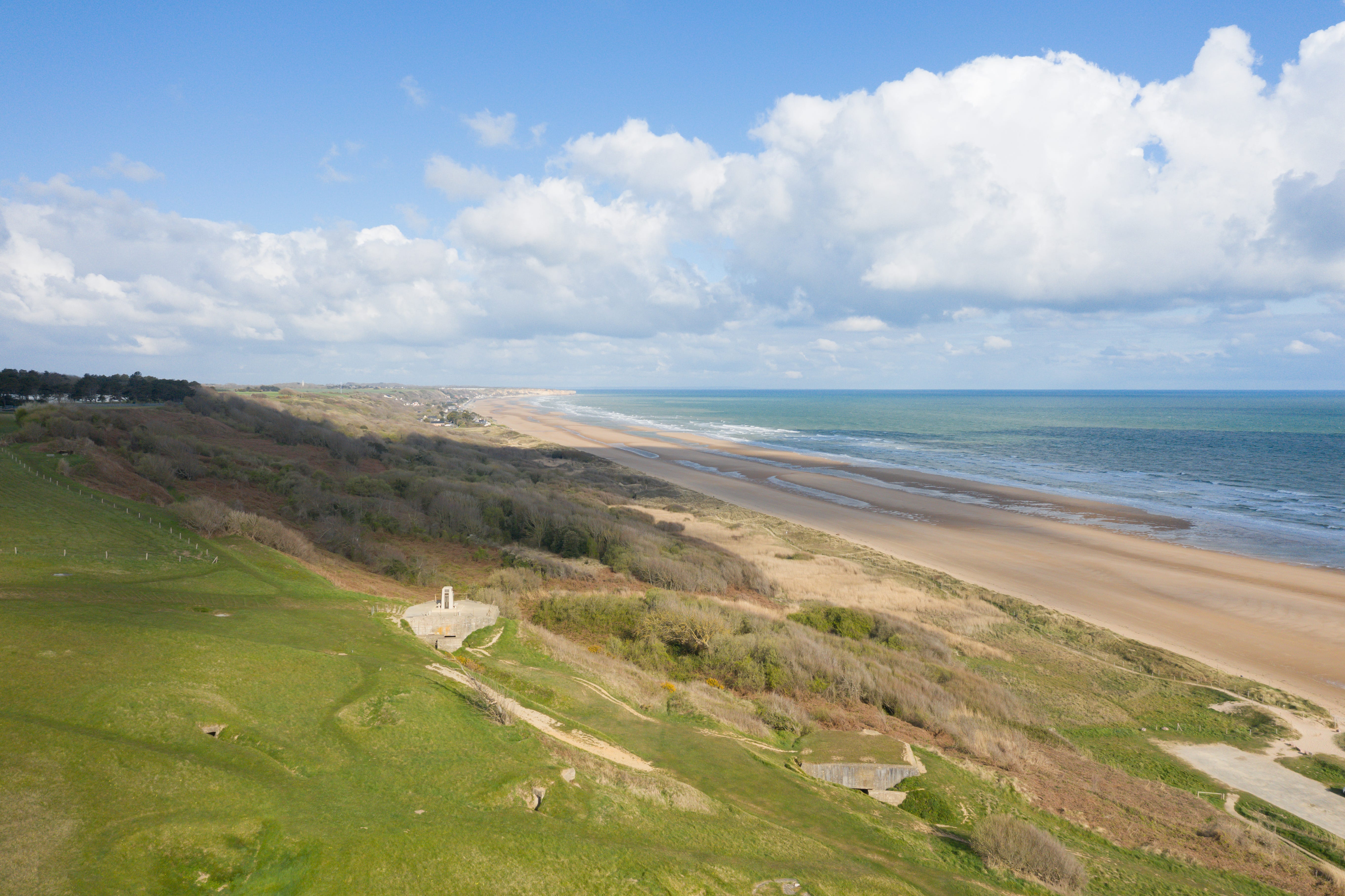
With Independence Day approaching, I recently read an account from veterans who participated in the Normandy landings.
What struck me wasn’t just their courage.
It was the lesson their stories revealed about perspective.
On the 50th anniversary of the invasion, two men were interviewed about their experiences on June 6, 1944.
The first was a soldier who landed on Omaha Beach.
He described the chaos as landing craft came ashore and soldiers charged the beaches under relentless German fire from the cliffs above. Surrounded by explosions, casualties, and confusion, he remembered thinking:
“There is no way we can possibly win.”
The second interview was with a pilot flying over the battle.
Unlike the soldier on the beach, he could see the massive Allied force assembled in the English Channel. He watched wave after wave of troops, ships, equipment, and reinforcements moving toward Normandy.
From his vantage point, he remembered thinking:
“There is no way we can possibly lose.”
Same battle.
Same moment.
Two completely different conclusions.
The difference wasn’t courage, intelligence, or commitment.
It was perspective.
Before going further, I want to be clear. Nothing I’ve experienced in business compares to what those men endured during the D-Day invasion and the long months of fighting that followed as Allied forces pushed across Europe toward victory.
Their sacrifices helped preserve freedoms that many of us enjoy today, and I am grateful for their service.
What struck me wasn’t the scale of the challenge.
It was the lesson.
Throughout my career, I’ve seen how people can experience the same situation and reach dramatically different conclusions based on what they can see.
When You’re Standing on the Beach
Many years ago, I was involved in a transportation operation that was struggling financially.
Revenue was declining. Costs were rising. Morale was suffering. Customers were frustrated.
For employees closest to the day-to-day operation, it often felt like the organization was fighting a losing battle.
And honestly, I understood why.
They were dealing with customer complaints, staffing challenges, equipment issues, and operational disruptions every day.
What they saw was real.
What they couldn’t always see were the contract negotiations, business development efforts, cost initiatives, operational changes, and strategic decisions taking place behind the scenes.
Their perspective was shaped by the challenges immediately in front of them.
Mine was shaped by a broader view of the organization.
Neither perspective was wrong.
One was simply wider than the other.
I’ve seen this same dynamic play out during turnarounds, start-ups, rapid growth, and periods of significant uncertainty.
I saw it while helping turn around operations in Orlando and Las Vegas.
I saw it while helping stabilize and improve a newly launched transportation operation in Austin.
And I saw it during the COVID-19 shutdown of Walt Disney World and the uncertainty surrounding when and how the resort would eventually reopen.
In each situation, people closest to the daily challenges often felt overwhelmed by the immediate reality they were experiencing.
Again, they weren’t wrong.
They were standing on the beach.
I remember seeing this firsthand while helping stabilize the operation in Austin.
Early on, the challenges seemed endless. We were addressing facility issues, refining processes, improving financial reporting, adding vehicles, and building organizational structure at the same time.
To many employees, it probably felt like there was always another problem to solve.
But by the summer, the broader picture was becoming clearer.
We had moved into new office space. New vehicles were arriving. Our maintenance facility was nearing completion. Financial performance was improving. Most importantly, we had greater confidence that our budgets, reporting, and operating processes accurately reflected the business's reality.
The day-to-day challenges hadn’t disappeared.
But from a leadership perspective, we could see signs that the operation was moving in the right direction.
The people closest to the work saw the obstacles.
We could see the progress.
Both perspectives were real.
