


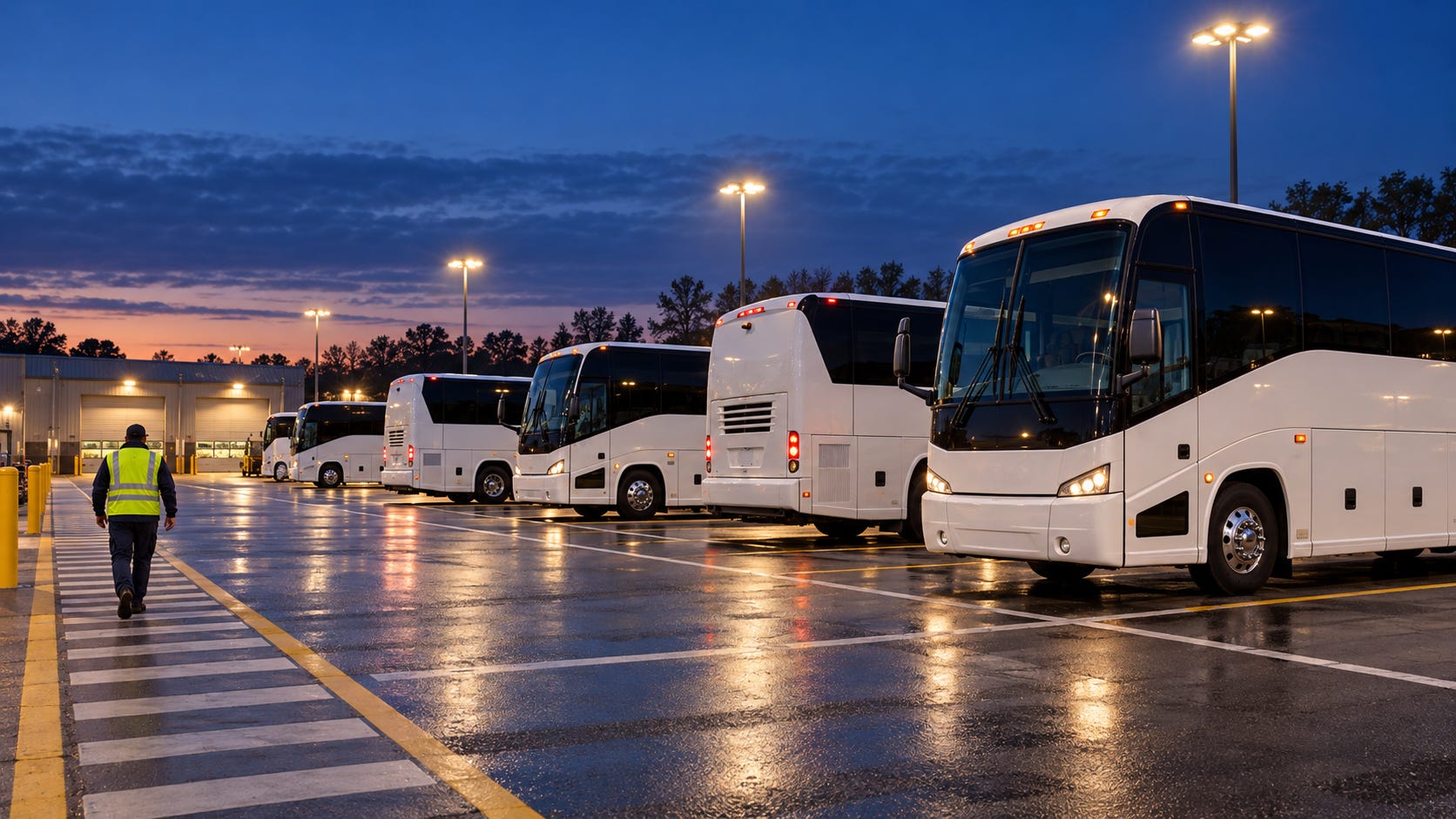
A recent School Transportation News article reported that a Broward County school bus driver died after being struck by another school bus in a district transportation lot.
Alfred Desmandes, 69, was walking toward the transportation building shortly before sunrise when, according to the sheriff’s office, he crossed into the path of a bus leaving the fuel pumps and was struck. The bus driver told detectives that he did not see Desmandes because the parking-lot lights were not illuminated. Desmandes was transported to the hospital and died the following day. The investigation was still underway when the article was published, and authorities had not determined why the lights were off or whether the lighting contributed to the collision.
It would be wrong to draw conclusions before that investigation is complete. But the story took me back more than 20 years to the day a workplace fatality changed how I would think about safety for the rest of my career.
At Disney, “No one gets hurt” was more than a slogan. It was a belief, and “no one” meant exactly that. It included employees, guests, contractors, vendors, suppliers, and anyone else on the property.
The human impact came first. A guest should not have a vacation defined by an injury. An employee or contractor should not leave work hurt—or fail to return home at all. At a resort with Disney’s visibility, a serious incident could also quickly become local or national news, damaging trust in the brand. But the principle began with the person: no one gets hurt.
I believed that before February 11, 2004. After that day, I understood it differently.
A day I will never forget
At the time, I was the Area Manager of Parades and Fireworks at Walt Disney World’s Magic Kingdom.
That afternoon, as a parade was stepping off—just beginning—a performer named Javier Cruz stepped between two trailered sections of a parade float. Javier was in costume, which limited his ability to fully see and understand what was happening around him. He was struck and killed by the float.
Javier had been part of the department for years. He was well known, deeply liked, and a fixture among the people who worked there. The grief that followed his death was overwhelming.
I remember calling my wife that afternoon. I normally would have left work around 5:30 or 6:00, but I told her it would be a long time before I came home. Emergency vehicles and police were everywhere.
During the call, she asked, “What is that noise in the background?”
It was the television helicopters circling overhead. The story had already reached the local news and would soon become national news.
In the days that followed, we consoled a devastated team, attended Javier’s funeral, examined what had happened, and reviewed our processes and procedures before the parade could fully operate again. OSHA arrived later that day to begin its investigation.
The investigators were professional and compassionate, but their role was not to comfort us or protect the organization. Nor should it have been. Someone had died at work. Their responsibility was to establish the facts, identify what had failed, and determine what needed to change.
Nothing prepares a leader for an employee who comes to work and never returns home. You can understand intellectually that safety matters. But once you experience a fatality, it is never again simply one of the many issues competing for your attention. It leaves an indelible mark.
It certainly left one on me.
